
Artemis II 101: What It Is, Who's Flying, and Why It's a Big Deal for Space Coast Visitors
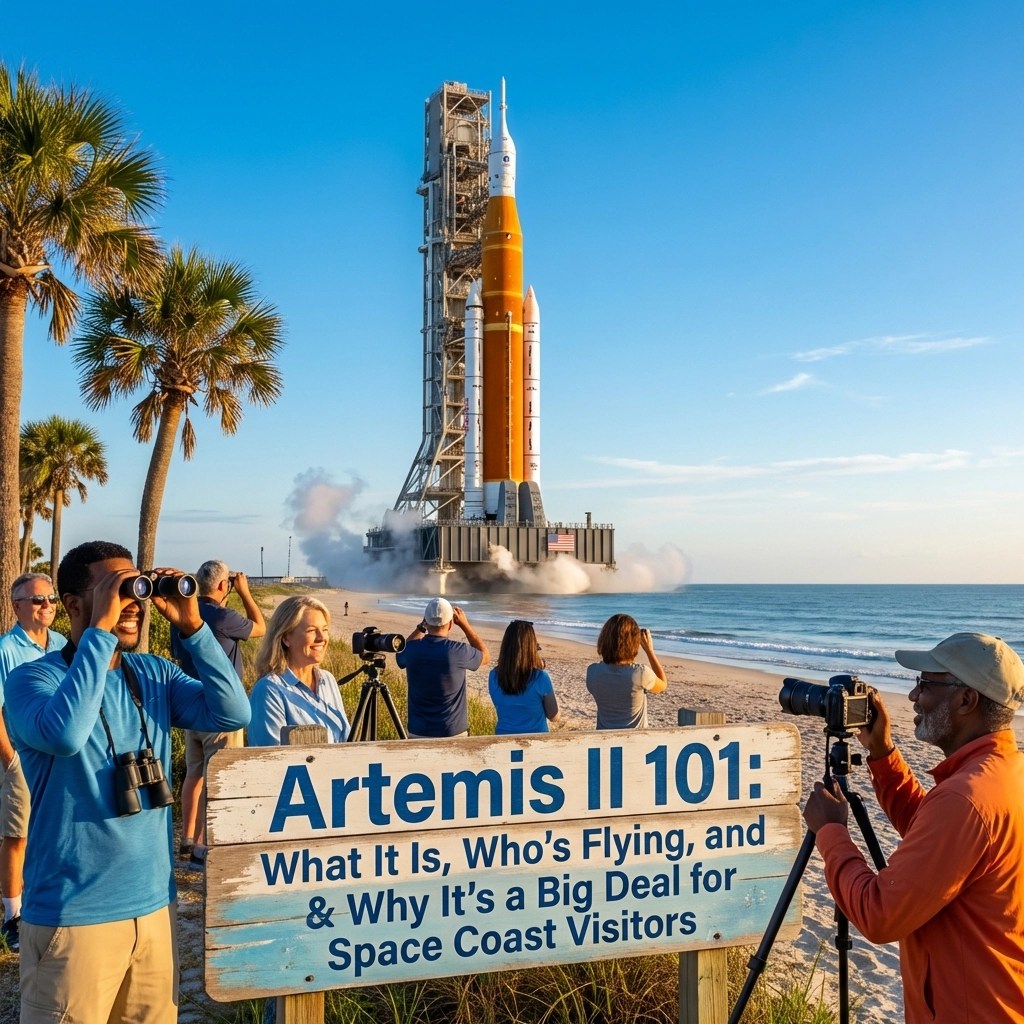
If you've been hearing buzz about Artemis II and wondering what all the excitement is about, you're in the right place. This isn't just another rocket launch: it's humanity's first crewed mission to the Moon in over 50 years. And guess what? It's launching right here from Florida's Space Coast, which means you have a front-row seat to history.
Whether you're a lifelong space enthusiast or just looking for something truly unforgettable to experience during your visit to Cocoa Beach, this guide breaks down everything you need to know about Artemis II: what the mission actually is, who's flying, and why it's such a massive deal for anyone visiting our little corner of Florida.
What Exactly Is Artemis II?
Let's start with the basics. Artemis II is NASA's first crewed deep-space mission since Apollo 17 splashed down way back in December 1972. That's a 54-year gap, which means most people alive today have never witnessed astronauts venturing beyond low Earth orbit.
The mission is a 10-day flight that will send four astronauts around the Moon and back to Earth. Unlike a landing mission, Artemis II is what's called a "free-return trajectory", basically a figure-eight path that takes the crew more than 230,000 miles from Earth and thousands of miles beyond the far side of the Moon at its farthest point.
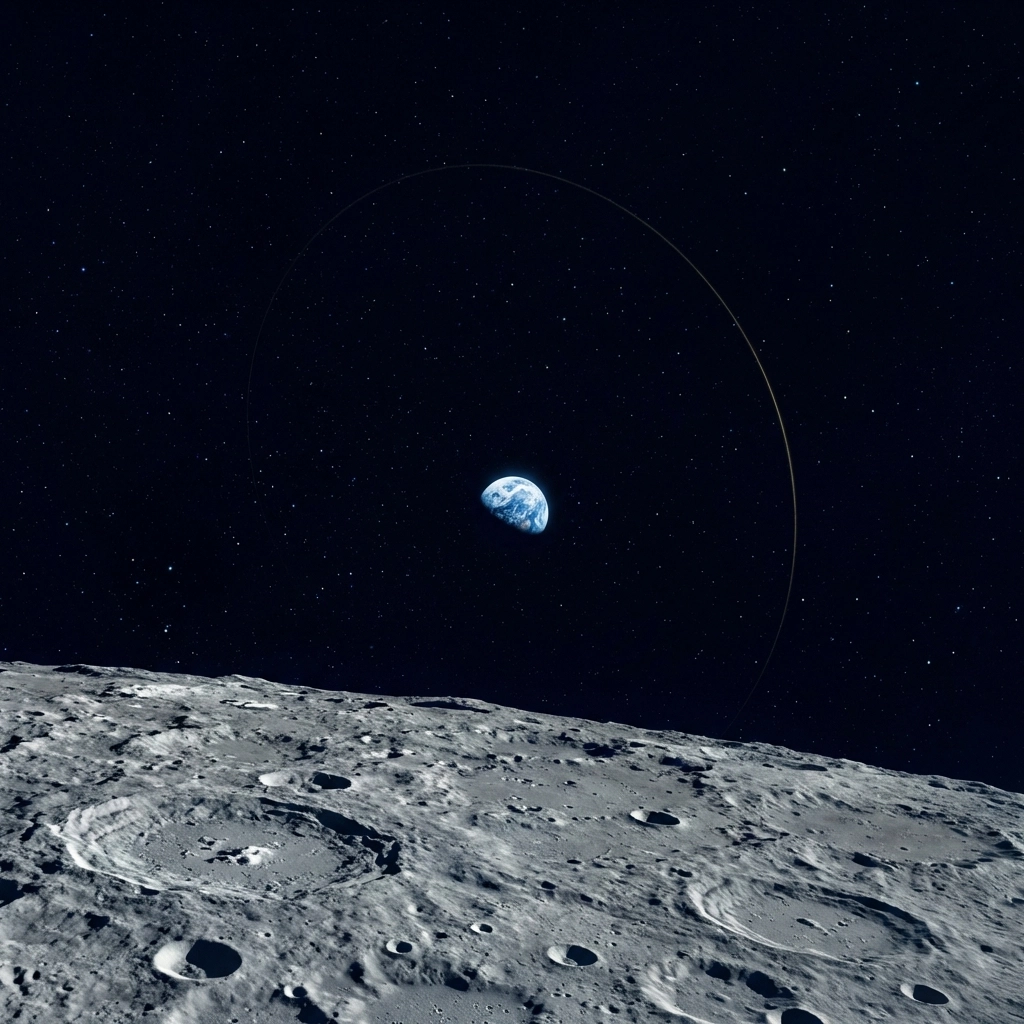
Here's the quick breakdown of the mission timeline:
- Launch from Kennedy Space Center aboard the Space Launch System (SLS) rocket
- Two days in Earth orbit while the crew checks all spacecraft systems
- Trans-lunar injection burn to begin the journey to the Moon
- Lunar flyby passing behind the Moon and swinging back toward Earth
- High-speed reentry and splashdown in the Pacific Ocean off San Diego
The whole point? To test NASA's deep-space exploration systems with humans actually aboard. The uncrewed Artemis I mission in 2022 was a success, but there's no substitute for putting real astronauts through the paces in the actual environment they'll face on future Moon landings.
The Spacecraft and Rocket
You can't talk about Artemis II without geeking out (just a little) about the hardware making it all possible.
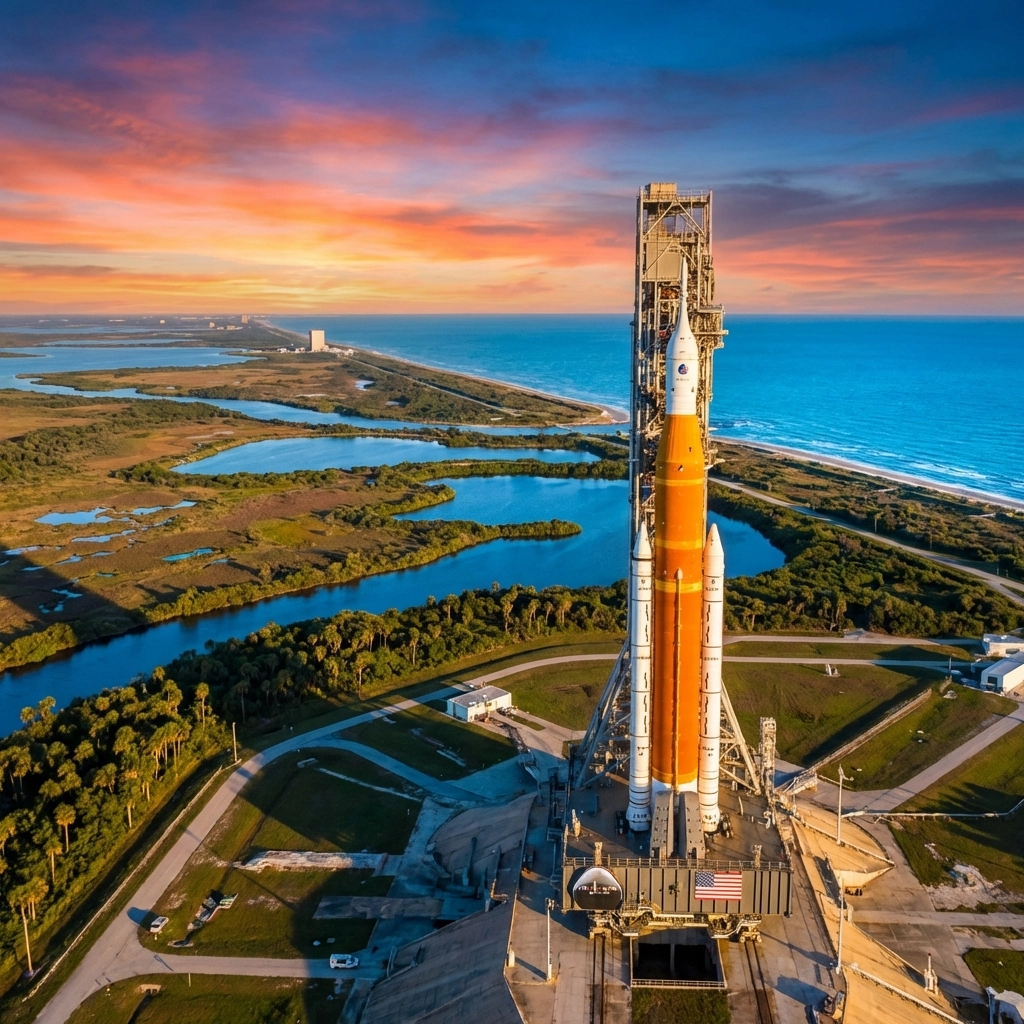
The Space Launch System (SLS) is the most powerful rocket NASA has ever built. Standing 322 feet tall, this thing is an absolute beast designed specifically for deep-space missions. When it lifts off, you'll feel the rumble in your chest from miles away: trust us on this one.
The Orion spacecraft sits on top of the SLS and serves as the crew's home for the entire mission. It's equipped with a European-built service module that provides propulsion, power, and life support. Orion has been specifically designed to keep astronauts safe during the extreme conditions of deep-space travel, including the scorching reentry temperatures when returning to Earth.
According to NASA, this combination of SLS and Orion represents the foundation for all future Artemis missions, including the ones that will eventually land astronauts on the lunar surface.
Meet the Crew
Four astronauts have been selected for this historic flight, and this crew is making history before they even leave the launch pad.
Reid Wiseman (Commander) : A NASA astronaut who previously spent 165 days aboard the International Space Station. He'll be leading the mission.
Victor Glover (Pilot) : Another NASA veteran who served as pilot on the SpaceX Crew-1 mission to the ISS. Glover will be the first Black astronaut to travel beyond low Earth orbit.
Christina Koch (Mission Specialist) : NASA astronaut who holds the record for the longest single spaceflight by a woman (328 days). She'll be the first woman ever to fly beyond low Earth orbit.
Jeremy Hansen (Mission Specialist) : A Canadian Space Agency astronaut and former fighter pilot. Hansen will be the first Canadian to travel to the Moon's vicinity.
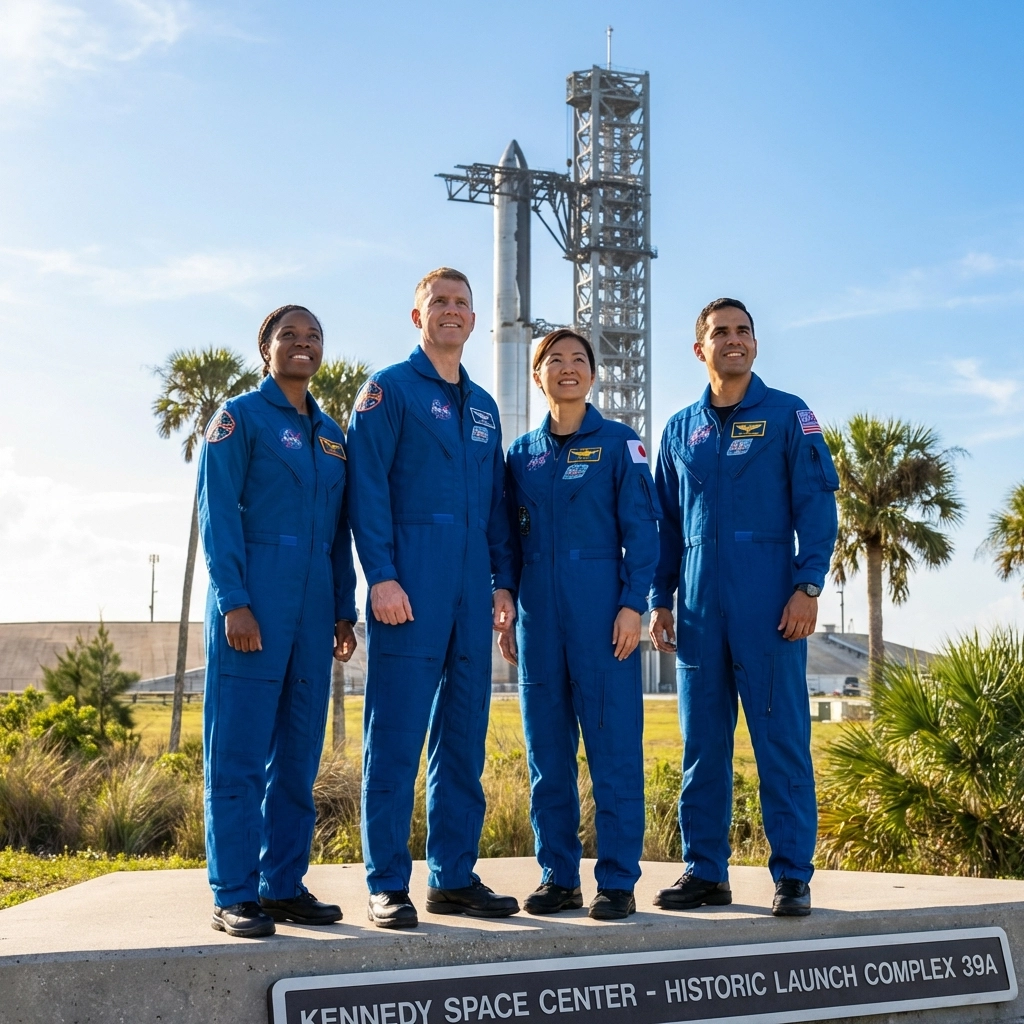
This crew represents a significant shift in who gets to explore deep space. For the first time, the journey to the Moon won't be limited to the demographics of the Apollo era: and that's something worth celebrating.
Why This Matters for Space Coast Visitors
Here's where things get really exciting for anyone planning a trip to Cocoa Beach or the surrounding area.
You're Witnessing History
The last time humans traveled beyond low Earth orbit, Nixon was president, bell-bottoms were fashionable, and the internet didn't exist. Artemis II ends that 54-year drought. Being here for the launch means you can tell your grandkids you watched humanity return to deep space in person.
The Launch Window
NASA is currently targeting no earlier than February 6, 2026 for launch, with backup opportunities extending through April 2026. Launch dates can shift based on weather and technical readiness, so if you're planning a trip specifically for the launch, build some flexibility into your schedule.
The Viewing Experience
The SLS rocket launching from Kennedy Space Center's Launch Pad 39B is going to be spectacular. We're talking about a daytime launch with massive solid rocket boosters and a column of fire that's visible for dozens of miles. The sound takes a few seconds to reach you, but when it does: it's unlike anything else.
Best Ways to Watch Artemis II
You've got several options for catching the launch, and where you watch from makes a huge difference in the experience.
1. Kennedy Space Center Visitor Complex
The closest public viewing location. Tickets typically sell out fast for high-profile launches like this, so book early if this is your plan.
2. Beaches and Parks
Playalinda Beach, Jetty Park, and various spots along the coast offer free viewing with unobstructed sightlines. Arrive several hours early to secure a good spot.
3. From the Water
This is our personal favorite (obviously). Watching a launch from a boat on the water gives you an unobstructed view, fewer crowds, and a completely unique perspective. The reflection of the rocket's light on the water adds something magical to the experience.

For more detailed information on launch viewing locations, check out our complete guide to the best places to watch rocket launches on Florida's Space Coast.
Planning Tips for Your Artemis II Trip
If you're serious about being here for this historic launch, here are some practical tips:
-
Book accommodations early : Hotels fill up fast for major launches, especially ones with this much publicity. Don't wait until the last minute.
-
Stay flexible : Launch dates can slip due to weather or technical issues. If possible, plan a trip of several days so you have backup opportunities.
-
Arrive at viewing spots early : Popular locations get crowded hours before launch. For beach viewing, arriving 3-4 hours early isn't overkill.
-
Bring supplies : Sunscreen, water, snacks, and a portable chair will make the wait much more comfortable. Florida sun is no joke, even in February.
-
Consider a launch viewing tour : Guided tours take the stress out of finding the right spot and often include amenities that make the whole experience more enjoyable.
The Bigger Picture
Artemis II isn't just about flying around the Moon: it's the critical stepping stone for everything that comes next. NASA's Artemis program aims to establish a sustainable human presence on and around the Moon, which will eventually serve as a proving ground for sending humans to Mars.
The data collected during this mission will directly inform Artemis III (the first crewed lunar landing since 1972) and all subsequent missions. The crew will test Orion's life support systems, communication capabilities, and navigation accuracy in ways that simply can't be replicated in Earth orbit or simulations.
For Space Coast visitors, that means you're not just watching a rocket launch: you're witnessing the beginning of a new era in human space exploration.
Experience the Launch From the Water
Want to watch Artemis II from a truly unique vantage point? Our launch viewing cruises put you right on the water with unobstructed views of Kennedy Space Center. No fighting for parking, no crowded beaches: just you, the water, and one of the most significant rocket launches of our lifetime.
Visit Cruise Cocoa to learn more about our launch viewing tours and book your spot before they fill up. This is going to be one for the history books, and we'd love to share it with you.
Source: NASA Artemis Program