
Discovering the Majestic Great Blue Heron: An Icon of Florida’s Wetlands

Discovering the Majestic Great Blue Heron:
An Icon of Florida’s Wetlands
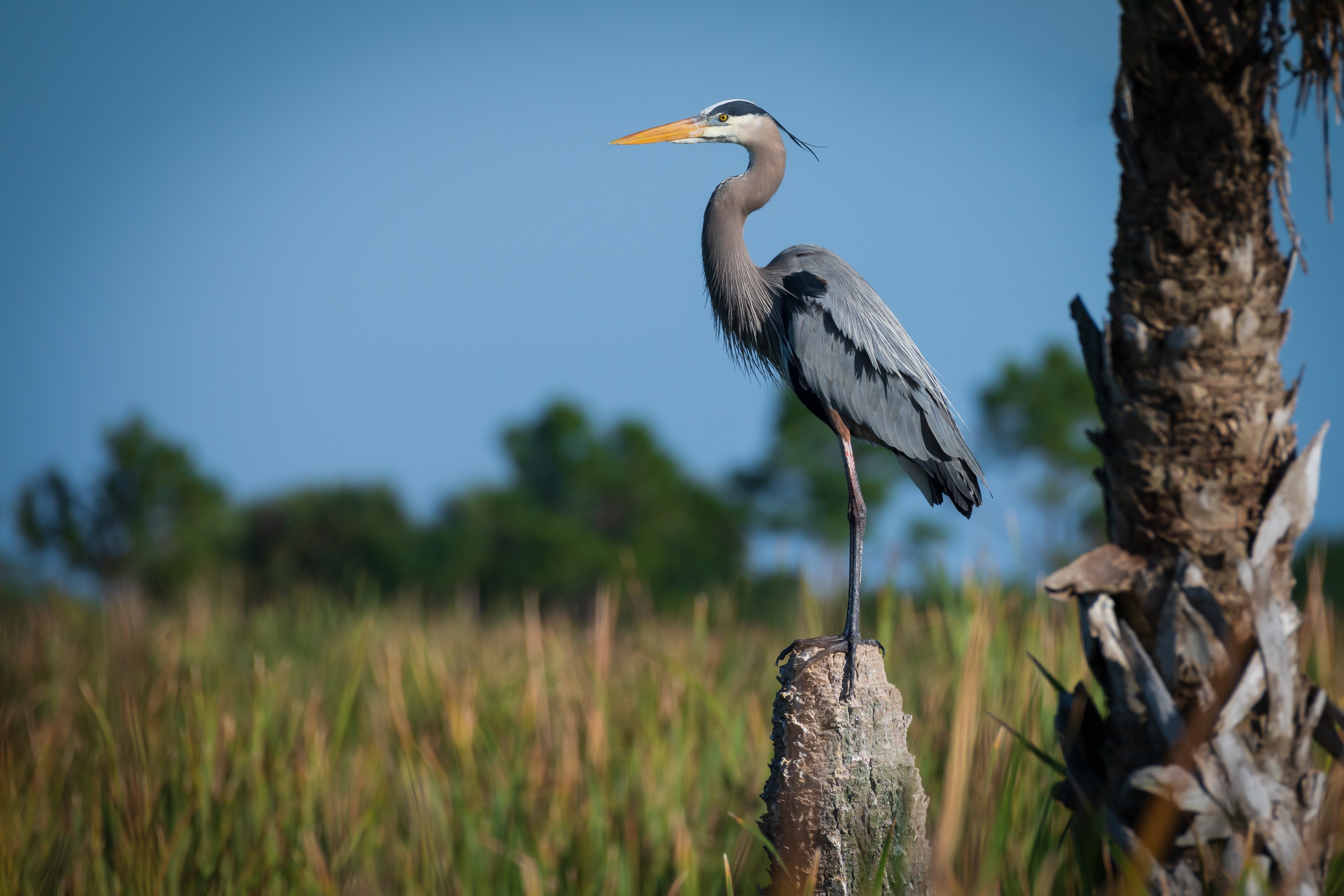
Florida’s diverse ecosystems are home to an array of captivating wildlife, but few creatures are as iconic and awe-inspiring as the Great Blue Heron. These majestic birds, with their striking appearance and graceful movements, are a common yet breathtaking sight in the wetlands and coastal regions of the Sunshine State. In this blog post, we will delve into the fascinating world of the Great Blue Heron, exploring its habitat, behavior, and the crucial role it plays in Florida’s natural environment.
The Great Blue Heron: A Snapshot
The Great Blue Heron (Ardea herodias) is the largest heron species in North America, standing about 4 feet tall with a wingspan that can reach up to 6.5 feet. Their distinctive blue-gray plumage, long legs, and sharp yellow bill make them easily recognizable. When in flight, they tuck their neck into an “S” shape, showcasing their elegant and efficient flying style.
Habitat and Distribution
Great Blue Herons are versatile and adaptable birds found across a wide range of habitats. In Florida, they thrive in wetlands, marshes, mangroves, and along the shores of rivers, lakes, and estuaries. Their presence is a testament to the health of these ecosystems, as they require clean water and abundant food sources to survive.
Feeding Habits and Diet
These herons are skilled hunters, primarily feeding on fish, but their diet is quite varied and can include amphibians, reptiles, small mammals, insects, and even other birds. They are often seen standing still in shallow waters, patiently waiting for the perfect moment to strike with their sharp bill. Their slow and deliberate movements allow them to approach prey without causing alarm, making them efficient predators.
Breeding and Nesting
Great Blue Herons typically nest in colonies known as heronries, which can be found in tall trees, shrubs, or even on the ground in protected areas. In Florida, nesting usually occurs between December and March. The male heron collects nesting materials, which the female uses to build a large, sturdy nest. Females lay 3-5 eggs, which both parents incubate for about a month. After hatching, the chicks remain in the nest for up to two months before fledging.
Importance in the Ecosystem
Great Blue Herons play a vital role in their ecosystems. As apex predators, they help maintain healthy fish populations and contribute to the balance of the food web. Their presence also indicates the overall health of wetland and aquatic environments, making them important bioindicators for conservation efforts.
Conservation and Threats
While the Great Blue Heron is not currently considered endangered, it faces several threats that could impact its population. Habitat destruction, pollution, and human disturbances pose significant risks. Protecting wetland areas and ensuring clean, safe habitats are crucial for the continued survival of these magnificent birds.
Observing Great Blue Herons
For bird enthusiasts and nature lovers, observing Great Blue Herons in their natural habitat can be a thrilling experience. Some of the best places to see these birds in Florida include the Everglades, Merritt Island National Wildlife Refuge, and various state parks with wetland areas. Early morning and late afternoon are ideal times for birdwatching, as herons are often most active during these periods.
Fun Facts About Great Blue Herons
- Great Blue Herons can live up to 15 years in the wild.
- They have a unique “croak” call, which is often heard during flight or when disturbed.
- Despite their large size, they are strong fliers and can travel long distances during migration.
The Great Blue Heron is more than just a beautiful bird; it is a symbol of Florida’s rich biodiversity and the intricate balance of its ecosystems. By learning about and appreciating these majestic creatures, we can better understand the importance of preserving their habitats and ensuring that future generations can continue to marvel at their grace and beauty. Next time you find yourself near a Florida wetland, take a moment to look for the elegant silhouette of the Great Blue Heron and appreciate the vital role it plays in our natural world.